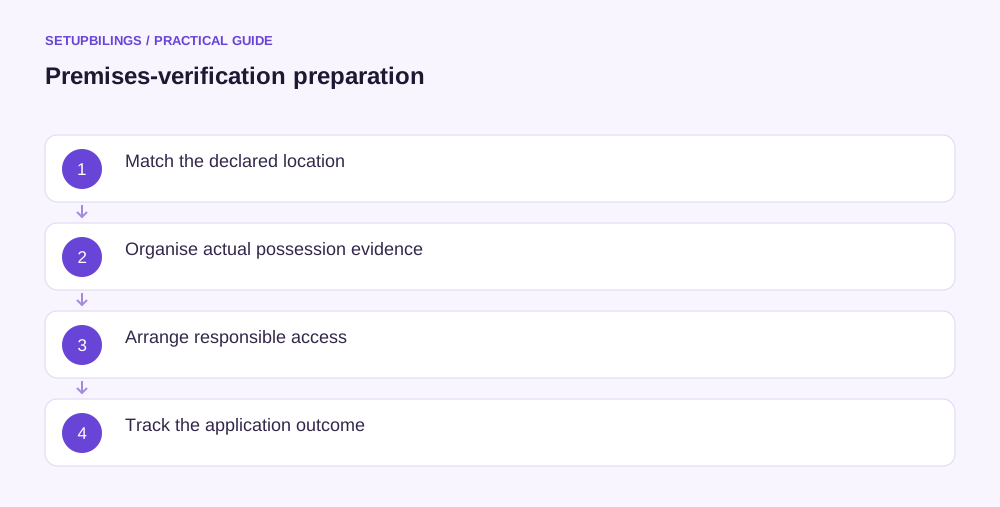
Prepare the real premises described in the application
GST registration physical verification concerns the existence and facts of the declared business premises. It is separate from biometric authentication at a GST Suvidha Kendra. Preparing well means making the location accessible, the business facts explainable and the records available. It does not mean borrowing another trader's stock or creating a temporary operation to conceal an incorrect address.
CBIC's 17 April 2025 registration instruction describes circumstances involving physical verification and the officer's reporting process. The instruction directs attention to the existence or non-existence of the declared principal place and GPS-enabled photographs. An applicant should therefore begin by checking that the application actually identifies the premises the business uses.
Review the address as someone visiting it would
Compare the submitted address with the agreement, permission or ownership-supporting record. Check building number, floor, unit, street, locality, district and PIN. Where the entrance is on another road or the building is known by two names, keep a factual explanation and relevant evidence rather than changing the source documents.
Check the map location recorded in the application. A pin at the edge of an industrial estate may not identify the actual plot. Make sure the written address can locate the unit even where map services use an approximate result. Accurate directions help establish the true location; they should not conceal a different address behind a convenient landmark.
For shared offices, confirm reception can identify the applicant and its authorised contact. The business should understand its actual access rights and permitted space. Paying for a membership does not make any branch of the coworking brand interchangeable with the declared centre, and a provider's staff should not be asked to invent activity that never occurs there.
Keep possession evidence organised
Use the evidence route matching the premises: owned, rented, leased, shared or used by consent. CBIC's instruction explains relevant documents and distinguishes registered and unregistered rental agreements. Keep a readable copy of the submitted pack and the original records available where legitimately required through the applicable process.
The documents should connect the right applicant with the actual unit. If a company operates from a director's property, distinguish the company's permission from the director's ownership. If a warehouse agreement names another group company, establish the real arrangement instead of assuming common ownership makes the entities' premises rights identical.
Do not produce unnecessary stacks of personal records to create an appearance of cooperation. Bring evidence relevant to the application and any actual request. The 2025 instruction also cautions against unwarranted additional documents and presumptive queries. A focused pack makes it easier to identify what proves ownership, possession and address.
Be ready to explain business activity
Prepare a short description of what happens at the premises, who works there and where related stock or records are held. It should agree with the nature of activities selected in the application. A new consultancy may have computers and contracts but no goods inventory; a warehouse may store stock without housing the central accounts team.
A business that has not yet begun full operations should explain its genuine stage of setup. Keep relevant possession, purchasing or customer records if they support that explanation. Do not manufacture invoices or place borrowed machinery in the unit because someone believes every applicant must already look like an established factory.
Illustratively, a Nashik electrical trader has taken possession of a rented shop and received ₹2 lakh of opening stock, while the shutters still display the previous tenant's faded name. The owner should explain the transition, identify the correct unit and have possession and stock records available. Moving the verification to a friend's larger showroom would create a false picture rather than solve the identification issue.
Arrange responsible access and communication
Monitor the official contact channels and any communication concerning the visit. Ensure someone who understands the business and has authority to assist can provide access as required. A watchman who knows only the building owner's name may be unable to explain which unit the applicant occupies.
Keep the selected person's contact and the application's references handy. If the premises are temporarily closed for a genuine reason, record that fact and use the relevant official communication route. Do not assume a private message to a consultant automatically reaches the verifying officer or alters the application's timetable.
Ask for official identification and understand what record is being requested, while cooperating with the actual verification. Retain a factual internal note of the date, people present and documents shown. Do not claim the business is approved merely because the visitor took photographs or verbally indicated that the address was found.
Track the application after the visit
Notification 38/2023 amended the physical-verification reporting framework, including the officer's FORM GST REG-30 process. The report is an officer task. The applicant's next step is to monitor the application, notices and outcome rather than attempt to upload a self-created substitute for the official report.
Check whether a clarification remains outstanding, and respond through the prescribed portal workflow. Keep site-visit notes with the submitted application and premises file. If an address error is discovered, review the proper correction process openly rather than trying to make later documents hide what was originally declared.
Preparation is complete when the business can show a real, identifiable location and explain its actual use through coherent records. That remains useful after registration too, because later moves, additional warehouses and possession changes should continue to be reflected accurately in the GST profile.